When it comes to choosing a smart speaker from Amazon, two of the most popular—and frequently compared—options are the Echo Pop and Echo Dot. Both bring Alexa into your home, enabling voice control of music, smart home devices, routines, and information requests. However, the decision between them often hinges on what you value most: affordability, compactness, audio quality, or smart‑home sophistication. In this detailed analysis we explore how Echo Pop Vs Echo Dot stack up—and which might be right for you.
Understanding the Basics: What Are Echo Pop and Echo Dot
The Echo family from Amazon represents its push into connected home devices, offering voice‑controlled speakers with virtual assistant capabilities. Among them, Echo Pop and Echo Dot occupy the entry‑ to mid‑range tiers—designed for those seeking a balance between price, size, and functionality. Whereas Echo Dot has long been the go‑to compact Alexa speaker, Echo Pop represents Amazon’s attempt to deliver a cheaper, smaller, and simpler alternative.
Echo Pop debuted as Amazon’s most affordable and smallest Echo model, while Echo Dot remains one of the company’s best-selling smart speakers. Both devices support Alexa, Wi‑Fi, Bluetooth streaming, Matter smart home protocols, and control of compatible smart devices.
But beyond that surface parity lies a range of differences—some subtle, others more consequential.
Price and Value: Cost Comparison
One of the most compelling aspects of Echo Pop Vs Echo Dot is price.
Echo Pop typically retails around USD $39.99, making it the cheapest way to bring Alexa into your space. Echo Dot, in contrast, generally costs about USD $49.99.
That roughly $10 difference can be meaningful—especially if you’re planning to deploy multiple speakers around a home, apartment, student dorm, or smaller living space.
Because many buyers value cost-efficiency, Echo Pop represents a highly attractive entry‑point. It undercuts the Dot enough that for many users, the cost savings outweigh the compromises.
On the other hand, the slightly higher price of Echo Dot often translates into better long‑term value—for people who care about audio performance, future‑proofing, and smart home expansion.
In short: if your main priority is price and low-cost Alexa integration, Echo Pop Vs Echo Dot usually tilts in favor of Echo Pop. If you’re willing to spend a bit more for improved features, Echo Dot becomes more compelling.
Design and Form Factor: Size, Aesthetics, and Where They Fit
Although both speakers are small enough to fit on a desk or shelf, their physical designs are quite different—and those differences affect where and how you can place them.
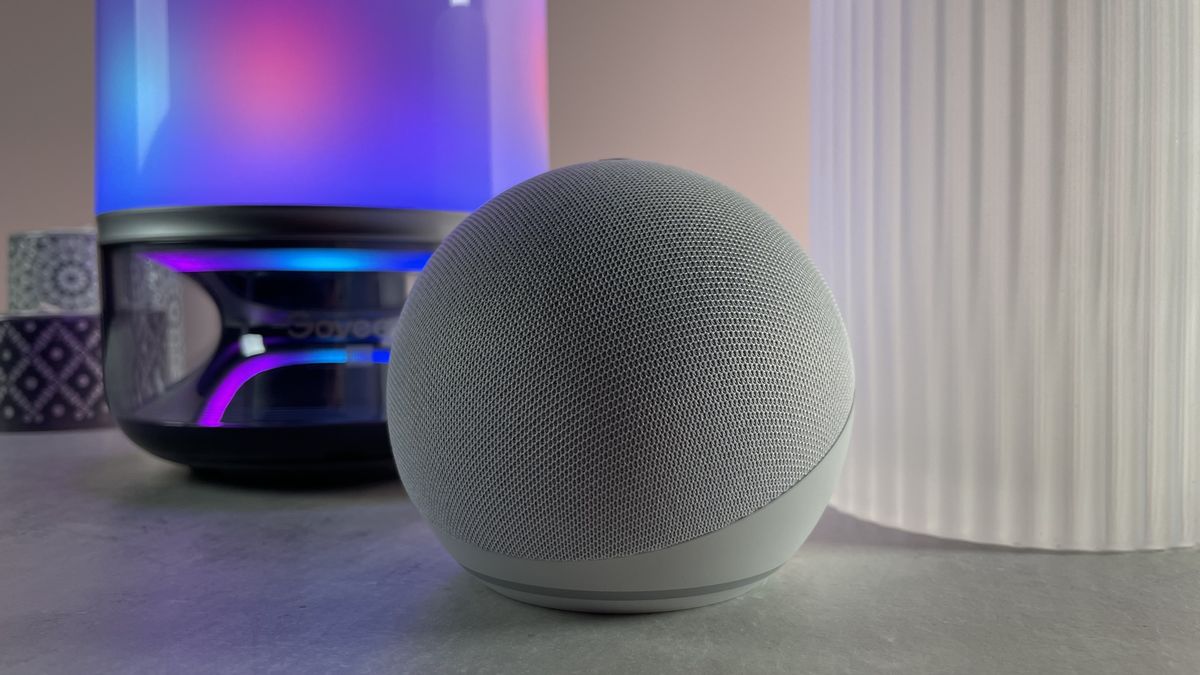
Echo Pop features a distinctive semi‑sphere / flat‑front design: from the front it resembles Echo Dot, but from the side it is much slimmer—roughly two‑thirds as deep as the Dot’s round base. This smaller footprint and lighter build make Echo Pop especially suited for desks, narrow shelves, corners, or crowded side tables.
Echo Dot retains a more spherical or puck‑like shape with a slightly larger base. Its round design provides a more balanced presence and may feel sturdier on larger surfaces.
In terms of materials and finishes, both devices offer similar color options—charcoal, glacier white, and other finishes—but Echo Pop tends to emphasize a simpler, minimalist style that leans toward modern interior aesthetics.
Thus in the Echo Pop Vs Echo Dot debate, placement and interior‑fit matter: Echo Pop is better when space is limited or you prefer a discreet, low-profile speaker; Echo Dot is better if you want a stable, solid unit that fits more prominently on a shelf or table.
Audio Performance: Which Sounds Better?
For many buyers, sound quality is the deciding factor. After all, if you’re buying a smart speaker, chances are you’ll be using it for music, podcasts, audiobooks, or media playback—not just voice commands.
Interestingly, while Echo Pop uses a slightly larger front‑firing speaker (1.95 inches) compared to Echo Dot’s 1.73‑inch driver, the practical results are mixed. On paper, the larger driver of Echo Pop might promise more volume or louder output. In some cases, users note that Pop sounds sufficiently loud and clear—especially in small rooms or near‑field listening contexts, like a desk or bedside table.
However, the shape and acoustic design of Echo Dot often yield a soundstage that feels fuller and richer. Several comparative reviews suggest that Dot delivers a more balanced audio experience, especially when playing music at moderate to high volumes or in slightly larger rooms.
Because audio reproduction depends not only on driver size, but also on enclosure, acoustics, and tuning, the larger speaker of Pop doesn’t guarantee superior sound in every scenario. For listeners who prioritize bass depth, rich midrange, or fuller sound distribution, Echo Dot tends to outperform Echo Pop.
Therefore, in the Echo Pop Vs Echo Dot showdown, if your priority is crisp, room‑filling sound for music or ambient audio, Echo Dot is likely the better pick. If you mostly use Alexa for voice commands, quiet music, or background audio in small spaces, Echo Pop’s performance may suffice—and its savings may justify small compromises.
Smart Features and Home Integration: Beyond Music
Because both Echo Pop and Echo Dot are part of the Amazon Alexa ecosystem, they share many core features. Both support Wi‑Fi (dual‑band), Bluetooth audio streaming, Alexa voice commands, control of compatible smart devices, and are compatible with the Matter smart home standard.
But when comparing Echo Pop Vs Echo Dot, smart‑home integration and extra sensors tilt significantly toward Echo Dot. Specifically, Echo Dot includes additional hardware: motion detection and temperature sensing. These sensors can enable home automation routines—such as turning on lights when motion is detected or adjusting heating/cooling based on temperature. Echo Pop lacks these sensors.
Moreover, Dot may offer features like a physical action button or microphone mute button, and often supports optional accessories such as external subwoofers or stereo pairing (depending on generation and region). Pop lacks stereo pairing support, limiting its potential in a multi‑room audio setup.
For users intending to build or expand a smart‑home ecosystem—where voice control, automation, triggers, and routines matter—these extra sensors and expanded functionality make Echo Dot a more versatile hub than Echo Pop.
Thus, in Echo Pop Vs Echo Dot, smart‑home lovers, tech-savvy users, or anyone anticipating automation will likely find Dot far more future-proof and functional.
Ease of Use, Setup, and Everyday Practicality
From a setup and daily‑use perspective, both speakers are designed to be user‑friendly—out of the box, they connect to home Wi‑Fi networks via the Alexa app; they support the same voice commands; and they both can control smart home devices, set alarms, timers, and routines, play music, news, audiobooks, and more.
Echo Pop has an advantage in simplicity and minimalism: its small size, light weight, and subtle design make it easy to move between rooms or place inconspicuously. This can be especially useful for renters, students, or people living in small apartments or shared spaces.
Echo Dot’s slightly larger size is rarely a disadvantage but may make it less discreet. However, the extra stability and broader feature set make it more dependable as a semi-permanent fixture in a home—especially in living rooms, home offices, or shared spaces.
Thus from a usability standpoint, Echo Pop Vs Echo Dot is less about complexity and more about lifestyle fit: compact minimalism versus modestly larger but more capable hardware.
Sound and Smart Features Compared: Real‑World Scenarios
To understand which speaker is right for you, it helps to imagine real-world use cases and how each performs under normal conditions.
If you live in a small apartment, dorm, or studio and want a budget-friendly Alexa device for basic voice control, alarms, timers, and occasional music or podcast listening—particularly near a desk, bedside table, or kitchen counter—the Echo Pop could be ideal. Its small size, adequate sound, and low cost make it a good “first Echo” or secondary speaker.
If you want a speaker that offers better audio fidelity for music or media, serves as a more central smart home hub, or will sit in a living room or shared space, then Echo Dot is more compelling. Its broader sensor support, potential for richer, fuller sound, and greater flexibility make it a more versatile choice.
For example, imagine you enjoy ambient music while cooking, occasionally stream playlists while relaxing, or host friends for movies and podcasts. In that case, Echo Dot’s richer sound and better room coverage will matter.
Alternatively, if your priority is just having Alexa for the occasional command—“Alexa, what's the weather?”, “Set a timer,” or “Add this to shopping list”—Echo Pop offers all that at a lower price and with less visual footprint.
Durability, Build Quality, and Materials
Although not always front-of-mind, build quality and materials play a role in usability and longevity. Both Echo Pop and Echo Dot employ fabric coverings on their outer shells, and Amazon has designed Echo Pop with sustainability in mind—using post-consumer recycled materials for fabric and aluminum, and including a low-power mode to conserve energy when idle.
Echo Dot, being slightly larger and heavier, may feel sturdier—potentially an advantage for long-term use. But Echo Pop’s lighter build means it is easier to reposition, relocate, or travel with.
From a maintenance perspective, both are relatively low-maintenance: no screens to worry about, no complex interfaces, just voice, Wi-Fi, and Bluetooth—with privacy controls like a mute switch or mic off button.
Therefore in the Echo Pop Vs Echo Dot comparison, durability and practical build considerations slightly favor whichever design fits the intended usage—portable and compact for Pop, stable and steady for Dot.
Who Should Choose Which: Recommendations Based on Use Cases
If you are a student, a renter, or live in a small apartment and mainly want a speaker for voice control, alarms, quick information, occasional music, or kitchen/bedroom use—then Echo Pop is likely sufficient and offers excellent value for money. Its small size makes it easy to tuck into tight spaces, and the lower price makes it easier to deploy multiple units if you want Alexa in several rooms.
If instead you care about music quality, richer audio, smart-home automation, want to connect other devices, or aim for a more integrated home environment, Echo Dot makes more sense. It is particularly suited for living rooms, home offices, or shared spaces where sound quality and smart functionality count more.
If you are uncertain but want flexibility: going with Echo Dot may offer the better long-term investment, since it accommodates more use cases and will likely serve well over time even as your needs evolve.
Making the Decision: How to Choose Between Echo Pop and Echo Dot
When deciding between these two models, consider asking yourself a few key questions:
What is my primary use for the speaker—basic voice commands and occasional music, or rich audio and smart-home automation?Where will I place the speaker—small room, desk, corner or living room, shelf or side table?Do I plan to build a larger smart-home ecosystem (lights, thermostats, sensors, routines)?Will I need the speaker to serve as a central hub or just as an occasional convenience?How important is price and value, versus long-term flexibility and performance?
If your answers lean toward minimal, budget-friendly convenience and compact spaces, Echo Pop is likely the better choice. If you lean toward quality, versatility, automation, and future-readiness, Echo Dot is probably worth the extra cost.
Conclusion
Choosing between Echo Pop and Echo Dot comes down to balancing priorities and imagining how you plan to use an Alexa-enabled smart speaker. Echo Pop offers an accessible, compact, and affordable route into the Alexa ecosystem—ideal for small spaces, minimal setups, secondary rooms, or people who only need basic voice commands and occasional audio playback. Its low price and small footprint make it an appealing “starter” device or supplemental addition to a home.
On the other hand, Echo Dot delivers a more robust and future-proof package. With superior audio potential, better room presence, and enhanced smart-home integration via motion and temperature sensors, it offers more flexibility and longevity—especially for users who care about music quality, automation, and scaling a smart-home environment.
In weighing Echo Pop Vs Echo Dot, think beyond the initial price. Consider placement, intended use, potential for smart-home expansion, and how much you value audio quality. For many, Echo Dot represents the more balanced and versatile choice—even if it costs slightly more. But if simplicity, space, and budget define your needs, Echo Pop remains a commendable and surprisingly capable option. For full details, please check our homepage.
Frequently Asked Questions (FAQs)
What are the main differences between Echo Pop and Echo Dot?
What differentiates Echo Pop from Echo Dot in design and size
Echo Pop has a flatter, semi-spherical design with a slimmer profile and lighter weight, making it ideal for tight spaces, desks, or small shelves. Echo Dot is more rounded and slightly heavier, giving it more stability and a more traditional smart speaker presence suitable for living rooms or larger spaces.
How do their prices compare and is the difference worth it
Echo Pop typically costs around USD $39.99 while Echo Dot retails for roughly USD $49.99, making Pop the more budget-friendly option. The modest price difference can be worth paying for Dot if you care about audio quality, smart-home capabilities, and long-term flexibility.
Which speaker has better audio quality overall
While Echo Pop uses a slightly larger front-firing speaker driver than Echo Dot, the acoustic design of Echo Dot tends to produce a fuller and richer sound, especially for music or audio played at higher volume or in larger rooms. For near-field listening and small spaces, Pop’s sound can be sufficient—but Dot generally offers better sound overall.
Are there smart-home feature differences I should know about
Yes. Echo Dot includes additional sensors such as motion detection and temperature sensing, enabling automation routines triggered by movement or environmental conditions. Echo Pop lacks these sensors, limiting its smart-home potential to basic voice control of devices and routines.
Which one is better value depending on user needs
If you live in a small space, use Alexa for basic tasks, or want a low-cost speaker for occasional music and voice control, Echo Pop offers excellent value. If you desire better sound, plan to integrate smart-home devices, or want a more capable and future-proof Alexa hub, Echo Dot is usually the better long-term value despite its higher price.