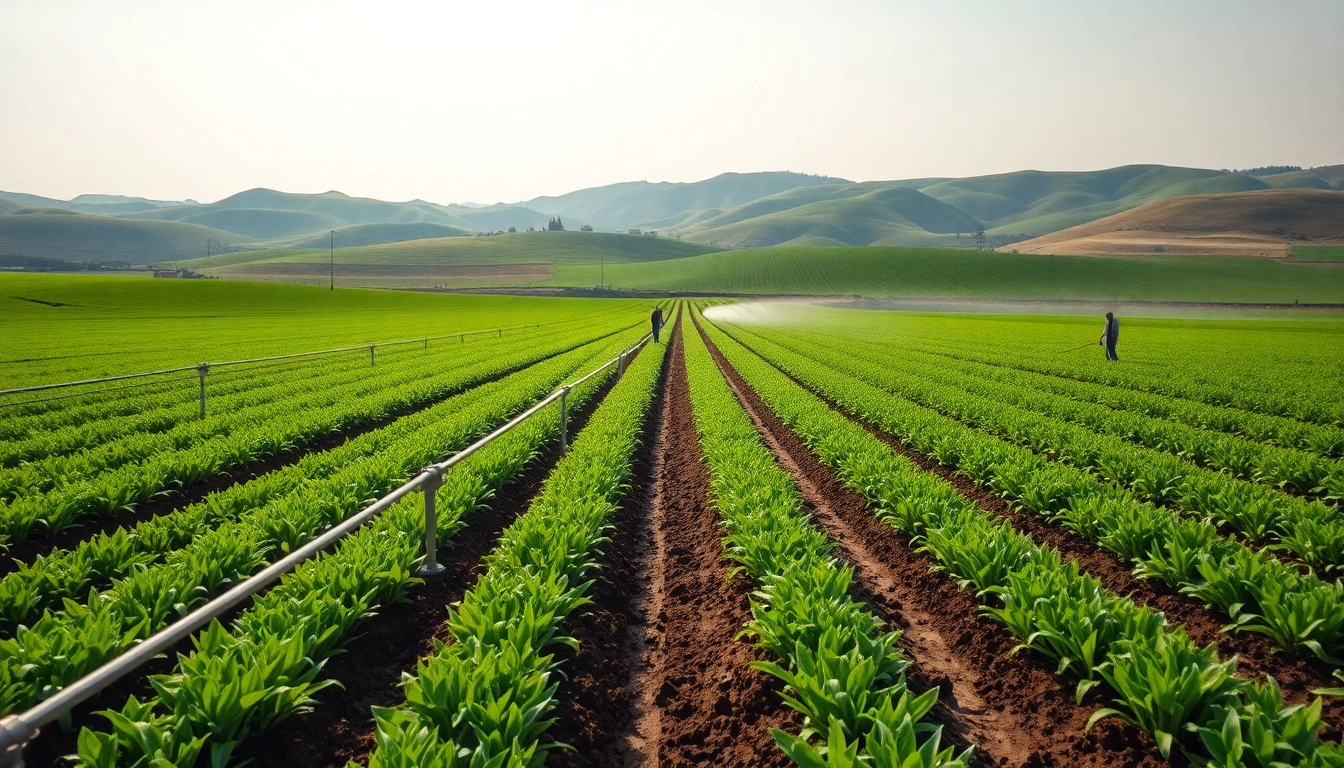
Understanding Land Irrigation: Fundamentals and Importance
Land irrigation is a critical agricultural practice that helps farmers manage water resources to optimize crop yields. Proper irrigation practices are essential in sustaining agricultural production, especially in arid regions where natural rainfall is insufficient. By employing effective land irrigation techniques, farmers can ensure their crops receive adequate moisture, thus enhancing growth, quality, and overall productivity.
What is Land Irrigation?
Land irrigation refers to the artificial application of water to soil or land to assist in the growing of crops and maintenance of landscapes. It can involve various methods and technologies intended to distribute water evenly and efficiently. The process of land irrigation can be traced back to ancient agricultural practices, and it has evolved significantly over the years, incorporating modern technology to increase efficiency and sustainability.
Benefits of Land Irrigation for Agriculture
The benefits of land irrigation are vast and multifaceted. Effective irrigation systems enhance agricultural productivity by providing water at critical growth stages, which is especially important in areas prone to drought. Below are some of the key benefits:
- Increased Crop Yield: By providing adequate water supply, irrigation helps maximize crop productivity, leading to higher yields.
- Improved Crop Quality: Consistent water availability can improve the flavor, size, and appearance of crops.
- Year-Round Farming: Irrigation enables farmers to cultivate crops during non-rainy seasons, thus extending the growing season.
- Soil Erosion Control: Proper irrigation techniques can help reduce soil erosion by maintaining soil structure and moisture.
- Water Conservation: Modern irrigation methods, such as drip irrigation, promote efficient water use, minimizing waste.
Types of Land Irrigation Methods
There are several methods of land irrigation, each suited to different types of crops, climate conditions, and soil characteristics. Understanding these methods is crucial for implementing effective irrigation strategies:
- Surface Irrigation: Water is distributed over the soil surface by gravity. This method is commonly used for row crops.
- Drip Irrigation: Water drips slowly onto the soil through a network of tubes. It’s highly efficient and minimizes evaporation and runoff.
- Sprinkler Irrigation: Water is sprayed over crops in the form of droplets, similar to natural rain. It’s versatile and can cover large areas.
- Subsurface Irrigation: This method involves placing water delivery pipes below the surface, allowing for deep watering without surface evaporation.
- Flood Irrigation: Water is allowed to flow over the fields, flooding them entirely. This method can waste water and is less efficient.
Common Challenges in Land Irrigation Systems
While land irrigation offers numerous advantages, it also presents several challenges that can hinder its effectiveness and sustainability. Understanding these challenges is crucial for developing effective solutions.
Pests and Weeds Affecting Irrigation Efforts
Pests and weeds can greatly affect the effectiveness of land irrigation systems. Excess moisture from irrigation can create conducive conditions for weeds to thrive, further challenging crop growth. Integrated pest and weed management strategies, including crop rotation and biological controls, can help mitigate these impacts.
Water Management Issues
Efficient water management is vital in land irrigation. Mismanagement can lead to over-irrigation or under-irrigation, stressing crops and wasting valuable resources. Using technology like soil moisture sensors can aid farmers in making informed decisions about their irrigation needs.
Climate Impact on Irrigation
Climate change introduces variability in water availability due to altered rainfall patterns and increased temperatures. This variability necessitates adaptive irrigation strategies that can cope with both excess water and drought conditions. Farmers must be proactive in adjusting their irrigation methods based on changing climatic conditions.
Best Practices for Implementing Land Irrigation
Implementing effective land irrigation requires knowledge and strategy. Below are best practices that can help optimize irrigation systems:
Choosing the Right Irrigation Method
Each irrigation method has distinct advantages and disadvantages. Farmers must consider labor costs, water availability, soil type, and crop requirements when choosing the right method. For instance, while drip irrigation is highly efficient, it may require a higher initial investment compared to surface irrigation.
Efficient Water Use and Conservation
Implementing water conservation techniques within irrigation systems can lead to significant cost savings and environmental benefits. Techniques such as scheduled watering, mulching, and using native plants can reduce water use considerably.
Regular Maintenance of Irrigation Systems
Routine inspections and maintenance of irrigation systems are crucial to ensure they operate efficiently. This includes checking for leaks, clogs, and proper functioning of all components. Regular maintenance helps prevent costly repairs and ensures optimal water delivery to crops.
Case Studies: Successful Land Irrigation Projects
Studying successful land irrigation projects provides insights into innovative practices and strategies that others can adopt. Below are illustrative examples of effective irrigation projects worldwide:
Innovative Techniques in Different Regions
A well-known example is the use of the furrow irrigation technique in parts of California and Spain, where farmers have successfully increased yields while using less water.
Impact on Crop Yield and Quality
Case studies show that areas that adopted advanced irrigation practices have experienced increased crop yields by up to 30%, demonstrating the significant impact of modern irrigation techniques.
Learning from Challenges Faced
Many projects experienced challenges such as initial investment costs and learning curves associated with new technologies. However, these challenges were often mitigated through community engagement and training.
Measuring the Effectiveness of Land Irrigation
Evaluating the effectiveness of irrigation systems is essential for making data-driven decisions. Various metrics can help gauge performance and sustainability.
Key Performance Indicators for Irrigation Projects
Farmers can use indicators like water use efficiency, crop yield per acre, and irrigation uniformity to assess the effectiveness of their systems. Tracking these KPIs allows for more streamlined operations.
Technological Solutions for Monitoring
Modern technology, including soil moisture sensors and IoT devices, enables real-time monitoring of irrigation systems. This technology can lead to faster, more informed decisions and adjustments in irrigation practices.
Adjusting Strategies Based on Measurements
Regularly reviewing measurement data allows farmers to adjust irrigation practices according to environmental and crop needs. This adaptive management ensures maximum efficiency and crop production potential.
FAQs about Land Irrigation
What are the main types of land irrigation?
The primary types of land irrigation include surface, drip, sprinkler, subsurface, and flood irrigation. Each method has distinct advantages based on environmental and crop needs.
How does drip irrigation conserve water?
Drip irrigation conserves water by delivering precise amounts directly to the plant roots, minimizing evaporation and runoff. This method is highly efficient and reduces overall water consumption.
What are the common challenges in irrigation?
Common challenges include pests and weeds, water management issues, climate impacts, and system maintenance. Addressing these challenges is crucial for effective irrigation.
How can technology help in land irrigation?
Technology aids in land irrigation through tools like soil moisture sensors, automated systems, and data analytics, enhancing efficiency and helping farmers make informed irrigation decisions.
What are the benefits of land irrigation?
Land irrigation improves crop yields and quality, enables year-round farming, helps in soil erosion control, and promotes water conservation practices, making it vital for agriculture.